

I nerdsniped myself today.
A friend of mine who owns an organizational Mathchops account asked me about using Claude to create a dashboard through our API. I thought, “I’ll just take a minute to play the role of an organizational account user and see what I can come up with.” Two hours later, there I was, still playing around with Claude and creating dashboards. I’d been planning to respond to other emails, make lunch, and run through various other less-fun tasks. Instead, I shot myself with a fun, nerdy idea.
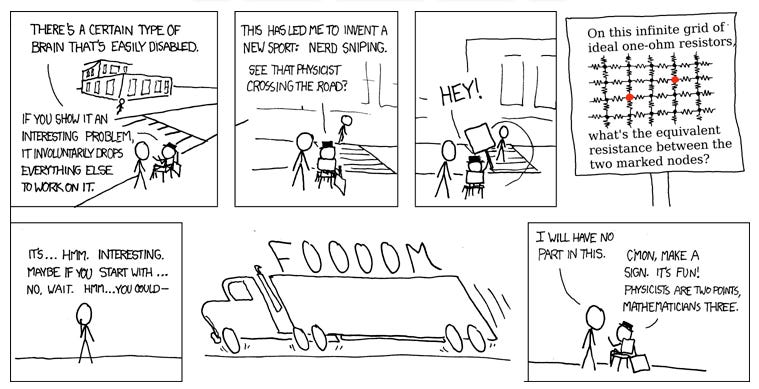
I first heard the term from my partners, Matt and Jon. They showed me this cartoon:
Anyway, I don’t regret it. I learned something, and I helped my friend.
These tangents have been very productive over the years – stopping to think about an idea while reading a book, imagining a better way to pick questions for students while we’re reviewing homework. Many of the posts I write here and the features I help develop on Mathchops owe their existence to these unplanned explorations.
One thing I don’t like about test prep – it doesn’t really allow for these tangents. If my student says something interesting about a reading passage, I’d love to talk about it for 10 or 20 or however many minutes the topic remains interesting for both of us. If a student is puzzled by the exponential growth formula, I’d love to talk about personal finance, the rule of 72, index funds, and lots of other related topics that are actually quite useful in regular life. And sometimes I do, if I think it will help the student learn something better.
But there is usually something more important to get to — I want to review all of their homework, and answer their questions, and set the goals for next week. That’s what students want, too. For now, I’ll have to settle for going on these expeditions outside of sessions.
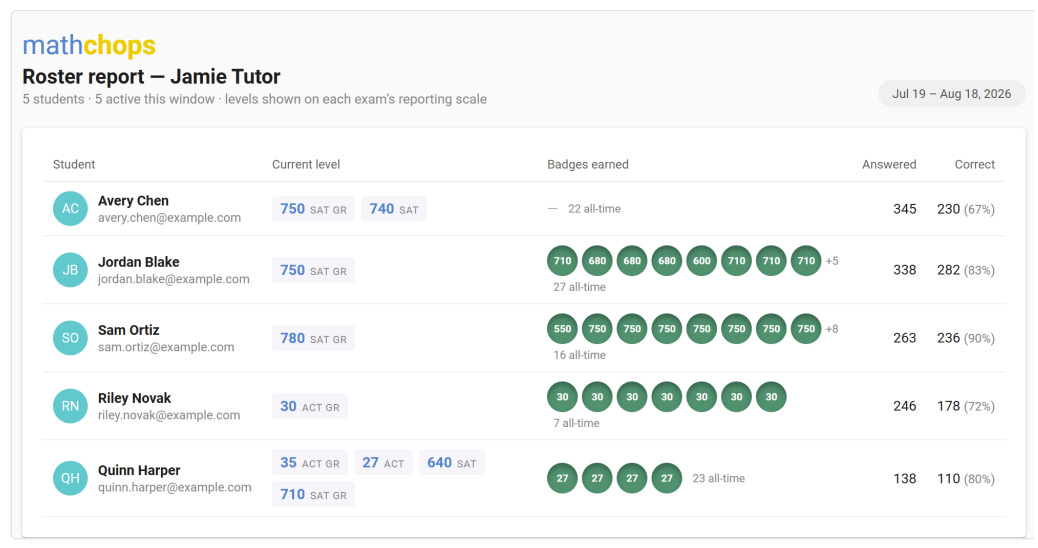
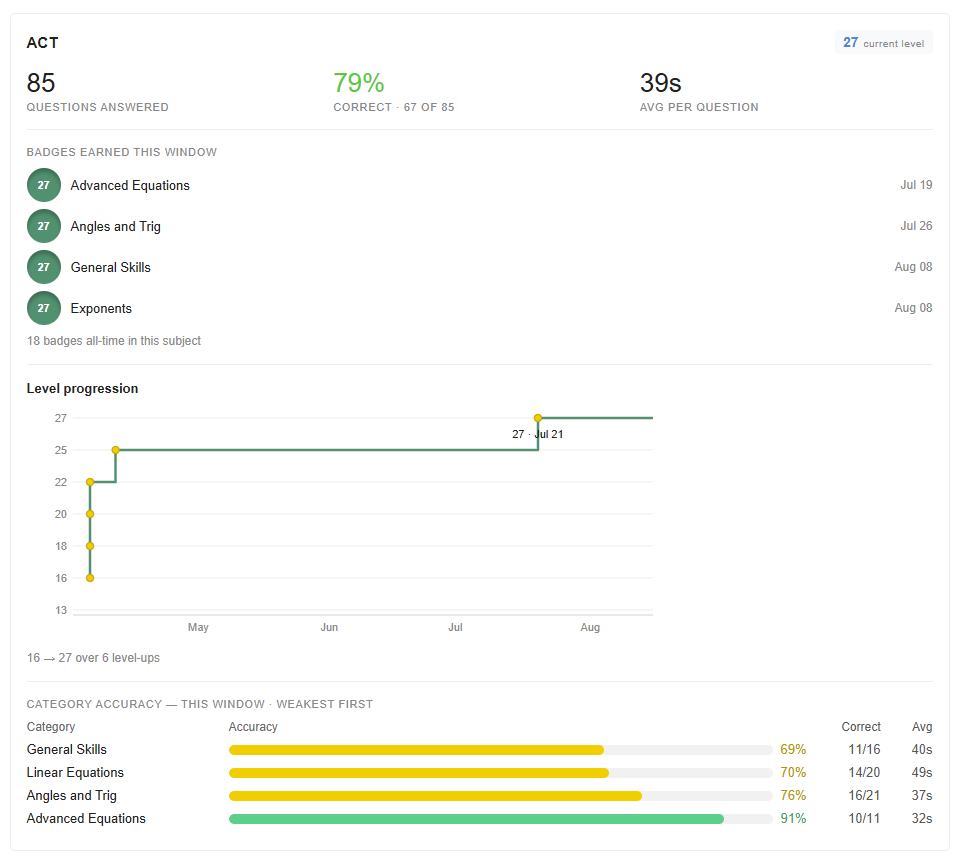
By the way, this is what the dashboard looks like, in case you are interested (I changed the names):
In my opinion, we probably mis-calibrate this all the time, estimating the value of what we SHOULD say as higher than it is, and the value of the digression as lower than it is. Personally, for most of my teaching career, I've had a list of digressions that appear to be nerd-sniping but are actually content or concept-rich. That is risky: some students don't see the value of the pseudo distraction and complain, and the next thing some dean is leaving a message on your answering machine...
Your friend is appreciative of both what you did and of learning the term “nerdsniping.”